The In Conversation series celebrates the stories and style of pioneers across the creative industries. We explore their craft, from beginnings to breakthroughs, and uncover how their Cutler and Gross frames mirror their unique aesthetic.
Creative by Document Studios | Photography by Rebecca Zephyr-Thomas | Art direction by David Hellqvist | Interview by Maisie Taylor
British Creative Director Tom Hingston and founder of Hingston Studio is best known for his prolific career spanning some of the most notable works in music, art and film. Over the last two decades, Tom has been celebrated for his collaborations including Grace Jones, David Bowie, Chemical Brothers and the transformative artwork for Massive Attack’s 1998 album, Mezzanine.
As a graphically charged powerhouse of creative work and clientele, it came as a surprise to find Hingston Studio is a small, but mighty team of 10. We caught up with Tom in the early hours before the team settled in, and discussed what fuels his creative process, where he turns for inspiration and how “great work is born out of trust”.
CG: How would you describe what you do?
TH: I’m a Creative Director, which is an all-encompassing role as I’m also the founder of the studio. Aside from the running of the business itself, my day to day here includes heading up the design team which entails a lot of plate spinning – we’re a specialist team of 10 and typically we tend to have around 30 projects going through the studio at any one time, so it’s a busy practice.
 Tom Hingston pictured at Hingston Studio in Bloomsbury, London.
CG: What is the best and worst thing about your job?
TH: I enjoy the process of creating – and even more so when collaborating with others. I’m a maker at heart. I think that's always been the case, and I think it’s fair to say that was one of the early motivations for founding the studio and building a team of likeminded individuals. The collaborative process forms the backbone of our entire practice, the more ambitious the project and the more people involved in bringing an idea to fruition, the more exciting that is for me – particularly when you’re collaborating with individuals from different disciplines. Our client base tends to be spread across multiple sectors, so no one day is the same in this office! The worst thing can be the daily logistics involved in actually running a design studio and striking the balance between taking on projects that are creatively rewarding, whilst being financially viable. It’s an ongoing paradox that I think every studio has to wrestle with.
"I enjoy the process of creating — and even more so when collaborating with others. I’m a maker at heart."
Tom Hingston, Creative Director and founder of Hingston Studio
CG: What innovation yet to come would improve your day/life the most?
TH: Well, an app or device that could scan minds and gain immediate insight into others' thinking would be extremely useful! Imagine a world in which you could walk into a room of people and collectively read everyone’s thoughts in seconds – could be amazing in a pitch scenario. I’m also interested in the idea of a device that can record your dreams. Imagine that, REM playback!
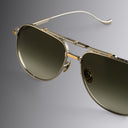
 The GR15 Aviator Optical in Black.
CG: When are you the most creative: early mornings or late evenings?
TH: Historically, most of my creative thinking was heavily weighted to working late at night and into the early hours of the morning. That still happens occasionally, but I tend to be most productive early in the mornings these days – around 5.30am usually. I think having children influenced that shift and I guess it’s partly your body evolving over time that initiates the change.
"We have a saying here [Hingston Studio], that great work is born out of trust."
Tom Hingston, Creative Director and founder of Hingston Studio
CG: What is the biggest danger for the survival of craft and craftsmanship?
TH: Allowing time for work to be created properly. Giving space for ideas to manifest and then adequate time for those concepts to be crafted. It's important to highlight that craftsmanship isn’t just about the finishing either – it’s the entire process from end to end, so it’s important to work with clients and partners who understand that. We have a saying here, that "great work is born out of trust". I think one of the biggest dangers facing the practice of craft today is the timeframe in which people expect things to be delivered. Everything is demanded at such a pace, there’s often little time left for real craftsmanship and reflection during the process.
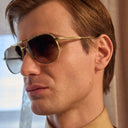
 Tom Hingston wears the GR15 Aviator Optical in Black, from the Graham Cutler collection.
CG: How important is curiosity, to you and the world generally?
TH: I think curiosity is everything and should be actively encouraged. For us at the studio, it forms the beginning of every project. I’m also a firm believer that the notion of questioning and enquiry should be nurtured more at school level. As children, we have the most curious and inquisitive minds, but that tends to get diminished by the system as we get older.
CG: Can you think of a bold and courageous person, dead or alive, known or unknown?
TH: I lost my father last year, after a long illness. Witnessing his strength and tenacity until the end is something that will endure with me forever.

CG: Can you name a piece of music, art, food or other cultural highlight that inspires you, and why?
TH: Interesting question. There’s so much I could draw from, but to highlight a few –
Blade Runner was a huge influence on me as a teenager – visually the whole, rain soaked, nocturnal world that Deckard occupies was so captivating, its dystopian architecture, wardrobe, styling, use of light. Sonically, the atmosphere of Vangelis' score – I think it’s the first time I recognised world building and the idea that one person can have a single vision (in this case Ridley) that can be brought to life through a wider team of collaborators.
Another highlight would have to be Massive Attack’s ‘Mezzanine' – that album changed everything for me. It forms the blueprint of the studio in many ways. The record was a real departure musically and so it felt right to express that shift visually – being part of that creative process with the individuals involved, was very exciting.
"It's important to highlight that craftsmanship isn’t just about the finishing either — it’s the entire process from end to end."
Tom Hingston, Creative Director and founder of Hingston Studio
CG: What is your creative process like, and what fuels it?
TH: Ordinarily we undertake an intense period of research at the beginning of every project, this process of enquiry forms a core understanding for the creative thinking and informs the project’s true context. A lot of this is rooted in conversation. I always think that’s one of the wonderful aspects of running a creative practice, that you get to learn so much about other people’s businesses, how they function, how they exist and how they’re experienced by others.
CG: What are you working on now?
TH: Among other things we’re developing projects for A24 and Apple, a number of interesting brand identity projects for cultural organisations, as well as opening title sequences for new upcoming shows on Netflix and Sky.

Set within a towering Georgian terrace in the storied area of London’s Bloomsbury, Hingston Studio is a space where calm and creativity coexist. On entering, we were met with a bibliophile’s dream of sprawling bookcases brimming with art and design works—arranged meticulously by colour. When mentioned, Tom laughed and explained how they’re not merely for show, but the studio’s collection of references and inspiration. The chromatic ordering he attributes to memorable covers—in a highly visual team it is easier to locate a book for research when you remember the colour of it.
Proudly displayed throughout Hingston Studio sits memorabilia from projects past. The original tongue-in-cheek ‘Don’t Think’ crosswalk sign created for The Chemical Brothers’ 2012 album takes pride of place in the studio’s meeting room. A defining moment in Tom’s career was the artwork for the darker 1998 album ‘Mezzanine’ by British electronic group Massive Attack, designed in collaboration with Nick Knight and Robert Del Naja. Found throughout the studio, this artwork demonstrates a more intriguing side of his work, including an aerosol can Hingston Studio designed for the album’s 20th anniversary—filled with synthetic DNA containing the tracklist.
Nearly three decades in, Tom Hingston remains exactly what he has always been as a maker and a collaborator. A firm believer that the best work is built on trust, Hingston Studio shows no signs of slowing, with its forward-thinking, ingenious drive and plans we're excited to see unfold.
Cutler and Gross would like to extend gratitude to Tom for his warmth and curiosity, and to the team at Hingston Studio for inviting us into their space. Tom wears the GR15 Aviator Optical in Black, from the Graham Cutler collection. Eye exams are available to book at Cutler and Gross Spitalfields, Knightsbridge, Bath and New York SoHo stores here.







































































































In Conversation: Tom Hingston
The In Conversation series celebrates the stories and style of pioneers across the creative industries. We explore their craft, from beginnings to breakthroughs, and uncover how their Cutler and Gross frames mirror their unique aesthetic.
Creative by Document Studios | Photography by Rebecca Zephyr-Thomas | Art direction by David Hellqvist | Interview by Maisie Taylor
British Creative Director Tom Hingston and founder of Hingston Studio is best known for his prolific career spanning some of the most notable works in music, art and film. Over the last two decades, Tom has been celebrated for his collaborations including Grace Jones, David Bowie, Chemical Brothers and the transformative artwork for Massive Attack’s 1998 album, Mezzanine.
As a graphically charged powerhouse of creative work and clientele, it came as a surprise to find Hingston Studio is a small, but mighty team of 10. We caught up with Tom in the early hours before the team settled in, and discussed what fuels his creative process, where he turns for inspiration and how “great work is born out of trust”.
CG: How would you describe what you do?
TH: I’m a Creative Director, which is an all-encompassing role as I’m also the founder of the studio. Aside from the running of the business itself, my day to day here includes heading up the design team which entails a lot of plate spinning – we’re a specialist team of 10 and typically we tend to have around 30 projects going through the studio at any one time, so it’s a busy practice.
CG: What is the best and worst thing about your job?
TH: I enjoy the process of creating – and even more so when collaborating with others. I’m a maker at heart. I think that's always been the case, and I think it’s fair to say that was one of the early motivations for founding the studio and building a team of likeminded individuals. The collaborative process forms the backbone of our entire practice, the more ambitious the project and the more people involved in bringing an idea to fruition, the more exciting that is for me – particularly when you’re collaborating with individuals from different disciplines. Our client base tends to be spread across multiple sectors, so no one day is the same in this office! The worst thing can be the daily logistics involved in actually running a design studio and striking the balance between taking on projects that are creatively rewarding, whilst being financially viable. It’s an ongoing paradox that I think every studio has to wrestle with.
Tom Hingston, Creative Director and founder of Hingston Studio
CG: What innovation yet to come would improve your day/life the most?
TH: Well, an app or device that could scan minds and gain immediate insight into others' thinking would be extremely useful! Imagine a world in which you could walk into a room of people and collectively read everyone’s thoughts in seconds – could be amazing in a pitch scenario. I’m also interested in the idea of a device that can record your dreams. Imagine that, REM playback!
CG: When are you the most creative: early mornings or late evenings?
TH: Historically, most of my creative thinking was heavily weighted to working late at night and into the early hours of the morning. That still happens occasionally, but I tend to be most productive early in the mornings these days – around 5.30am usually. I think having children influenced that shift and I guess it’s partly your body evolving over time that initiates the change.
Tom Hingston, Creative Director and founder of Hingston Studio
CG: What is the biggest danger for the survival of craft and craftsmanship?
TH: Allowing time for work to be created properly. Giving space for ideas to manifest and then adequate time for those concepts to be crafted. It's important to highlight that craftsmanship isn’t just about the finishing either – it’s the entire process from end to end, so it’s important to work with clients and partners who understand that. We have a saying here, that "great work is born out of trust". I think one of the biggest dangers facing the practice of craft today is the timeframe in which people expect things to be delivered. Everything is demanded at such a pace, there’s often little time left for real craftsmanship and reflection during the process.
CG: How important is curiosity, to you and the world generally?
TH: I think curiosity is everything and should be actively encouraged. For us at the studio, it forms the beginning of every project. I’m also a firm believer that the notion of questioning and enquiry should be nurtured more at school level. As children, we have the most curious and inquisitive minds, but that tends to get diminished by the system as we get older.
CG: Can you think of a bold and courageous person, dead or alive, known or unknown?
TH: I lost my father last year, after a long illness. Witnessing his strength and tenacity until the end is something that will endure with me forever.
CG: Can you name a piece of music, art, food or other cultural highlight that inspires you, and why?
TH: Interesting question. There’s so much I could draw from, but to highlight a few –
Blade Runner was a huge influence on me as a teenager – visually the whole, rain soaked, nocturnal world that Deckard occupies was so captivating, its dystopian architecture, wardrobe, styling, use of light. Sonically, the atmosphere of Vangelis' score – I think it’s the first time I recognised world building and the idea that one person can have a single vision (in this case Ridley) that can be brought to life through a wider team of collaborators.
Another highlight would have to be Massive Attack’s ‘Mezzanine' – that album changed everything for me. It forms the blueprint of the studio in many ways. The record was a real departure musically and so it felt right to express that shift visually – being part of that creative process with the individuals involved, was very exciting.
Tom Hingston, Creative Director and founder of Hingston Studio
CG: What is your creative process like, and what fuels it?
TH: Ordinarily we undertake an intense period of research at the beginning of every project, this process of enquiry forms a core understanding for the creative thinking and informs the project’s true context. A lot of this is rooted in conversation. I always think that’s one of the wonderful aspects of running a creative practice, that you get to learn so much about other people’s businesses, how they function, how they exist and how they’re experienced by others.
CG: What are you working on now?
TH: Among other things we’re developing projects for A24 and Apple, a number of interesting brand identity projects for cultural organisations, as well as opening title sequences for new upcoming shows on Netflix and Sky.
Set within a towering Georgian terrace in the storied area of London’s Bloomsbury, Hingston Studio is a space where calm and creativity coexist. On entering, we were met with a bibliophile’s dream of sprawling bookcases brimming with art and design works—arranged meticulously by colour. When mentioned, Tom laughed and explained how they’re not merely for show, but the studio’s collection of references and inspiration. The chromatic ordering he attributes to memorable covers—in a highly visual team it is easier to locate a book for research when you remember the colour of it.
Proudly displayed throughout Hingston Studio sits memorabilia from projects past. The original tongue-in-cheek ‘Don’t Think’ crosswalk sign created for The Chemical Brothers’ 2012 album takes pride of place in the studio’s meeting room. A defining moment in Tom’s career was the artwork for the darker 1998 album ‘Mezzanine’ by British electronic group Massive Attack, designed in collaboration with Nick Knight and Robert Del Naja. Found throughout the studio, this artwork demonstrates a more intriguing side of his work, including an aerosol can Hingston Studio designed for the album’s 20th anniversary—filled with synthetic DNA containing the tracklist.
Nearly three decades in, Tom Hingston remains exactly what he has always been as a maker and a collaborator. A firm believer that the best work is built on trust, Hingston Studio shows no signs of slowing, with its forward-thinking, ingenious drive and plans we're excited to see unfold.
Cutler and Gross would like to extend gratitude to Tom for his warmth and curiosity, and to the team at Hingston Studio for inviting us into their space. Tom wears the GR15 Aviator Optical in Black, from the Graham Cutler collection. Eye exams are available to book at Cutler and Gross Spitalfields, Knightsbridge, Bath and New York SoHo stores here.