In 1971, Mr Graham Cutler and Mr Tony Gross first unlocked the doors to 16 Knightsbridge Green. Unbeknownst to them, the small yet mighty store and workshop would unmistakably shape the language of eyewear, 55 years on.
 A photograph of the first Cutler and Gross store in the 1970s, at 16 Knightsbridge Green, London.
Taste and Technicality
The eponymous founders Mr Cutler and Mr Gross first met at Northampton College in London through a shared optometry course. While they both saw eye-to-eye with ocular health and held a penchant for exceptional craft, the pair spoke two very different, yet distinct design languages.
Mr Cutler’s signature is owed to refined eyewear, always insisting he was the technicality of the two. He worked with creatives and professionals deemed the best of their respected fields, and tailored his work towards those after a frame more refined, slighter, and modest. Mr Gross on the other hand had a methodology on the more curious side—mischievous some will even say. He brought a creative flair to his work, initially sourcing and selling vintage frames to his inner circle and the likes of rockstars, musicians, and artists who looked to him for eyewear that didn’t go unnoticed.
 Mr Tony Gross (left) and Mr Graham Cutler (right), London 1960s. Mr Gross had a mischievous side and asked Mr Cutler to swap glasses with him for this photo.
When they graduated in 1963, Mr Cutler remained at college as a research assistant and Mr Gross went on to set up shop in his own consulting room in North London. Over time their frustrations grew with the range of glasses on offer as NHS standard, Mr Gross notoriously stating they were “boring, unsuitable or just plain ugly.”.
When the pair came to this collective realisation, they agreed to pool resources and open their first location at 16 Knightsbridge Green in London, after chancing across a former hairdresser’s shop and bringing on board George Smith as their frame maker, and his wife Franny. George began his career at the Prince eyewear factory, a place where many UK opticians sourced their frames at the time. Among the production lines, a handful of pieces stood out from the crowd, clearly made by someone who cared deeply about what they were doing. Tony and Graham traced that trail back to George and were quick to recruit him to their humble shop in Knightsbridge.
 The late Cutler and Gross framemaker, George Smith and his wife Franny. London, 1970s.
He worked slowly and by hand, layering sheets of colour, cutting each frame with a jigsaw, carving grooves, drilling for hinges and lenses, then tumbling them smooth in polishing barrels. After assembling, each frame moved to the final stage where his wife Franny hand-tinted lenses and polished each style to its finished form.
“The early 1970s were a time of reinvention, and Cutler and Gross dressed the faces of the people who were responsible.”
Marie Wilkinson, Cutler and Gross Style Director
A decade later, Marie Wilkinson joined the collective in 1983 as a pre-registered optician and has been part of the Cutler and Gross story ever since. Marie was first recommended for the job by a friend at dispensing optician college, who told her what an eccentric Mr Gross was, and knew the role would suit her perfectly. Over the years, Marie became a close friend of founders Mr Cutler and Mr Gross, and lived through the brand’s most prolific years—travelling the world to showcase designs, proudly presenting cutting-edge eyewear, and later serving as Design Director from 2000-2017 and now the Style Director. At the time, the team were witness to the rise of Cutler and Gross in leading magazines, including Vogue, Harper’s Bazaar, and Marie Claire. “The early 1970s were a time of reinvention, and Cutler and Gross dressed the faces of the people who were responsible.” Marie recalls. 16 Knightsbridge Green has always had an air quite like a private members’ club: intimate and brimming with a close-knit clientele of visionaries and luminaries alike. Today, as Style Director, Marie continues to shape this story, bringing decades of experience and emotion to everything we do.
 Style Director Marie Wilkinson, photographed in front of Cutler and Gross magazine features.
Beyond Bricks and Mortar
Cutler and Gross has never been just a store. Since the very first day, each location has offered an experience similar to that of walking into a gallery, admiring over half a century of craft and design.
When opening the Knightsbridge store, Mr Cutler and Mr Gross knew their eye for excellence would exceed far beyond the standard shopfront and sought the help of an acquaintance, Piers Gough CBE RA. A training architect at the time, Piers originally knew Tony Gross from their overlapping circles, with mutual friends like painter Patrick Heron CBE, potter Carol McNicholl, and columnist and editor, Janet Street Porter in the swinging 60s.
 Piers Gough CBE RA (left), Mr Tony Gross (middle), Janet Street Porter (right). London, 1971.
When they first joined up, Piers was the obvious recruit who presented a number of speculative designs for the small, cul-de-sac shop. A far cry from what was ‘trending’ at the moment, he was tasked with the feat of making the first ever Cutler and Gross store bridge the gap between bold and playful eyewear, and the more serious side of medical eye health.
“Tony, with his terrific visual sense and style was the design contact and champion. Graham, always amused, made the perfect sounding board for ideas and proposals.”
Piers Gough CBE RA
 Cutler and Gross at 16 Knightsbridge Green, London, 1974.
“I had not tackled an optician before. Tony and Graham felt that the ‘clinical look’ for an eye exam room was intimidating and sometimes panicked patients into giving hurried answers. A more study-like space was envisaged.” Piers stated. “The shop however was to be a minimal background to the bold eyewear. This was a distinct contrast to other opticians who tended to have rather stuffy, over-decorated shops. Now they’ve all learnt to let the specs do the talking!”.
Upon stepping foot inside 16 Knightsbridge Green, it becomes apparent that nothing competes with the eyewear. The minimal interior meant carefully curated rows of sunglasses and opticals could take centre stage with little to no in-store branding and a small counter bringing lightness to the room.
 Cutler and Gross at 16 Knightsbridge Green, London, 1974.
However, around back lies a new calibre of space—the eye exam room—that steers clear from the clinical, and embraces the curious. Floor-to-ceiling plywood graces the walls in a warm ochre tone, contrasted by silver sheets of perforated metal, vivid red trims, and matching carpet. “The 60s Pop Art years meant there was interest in non-traditional, even ‘vulgar’ materials from industrial and vehicle design worlds.” Piers explains. Proving that bold eyewear extends far beyond the frame of vision.
A Treasure Trove
A hidden time capsule in the heart of London, 16 Knightsbridge Green is its own treasure trove and showcase of few prized possessions. Optometrist Salvatore Scinaldi has been with Cutler and Gross for over 25 years, and recalls a history as suave as the clientele he has seen through the doors. From creatures of habit who have gravitated towards the same style of opticals for many years, to those who dare to explore the different hues, textures, and silhouettes of sunglasses on offer. Each frame tells a story as unique as each customer.
"What is so remarkable about Graham Cutler and Tony Gross, and the shop’s subsequent work is that it is so strong, characterful, witty, and idiosyncratic. Yet still brilliantly desirable now and much copied.”
Piers Gough CBE RA
Cast your gaze past the modern instruments for eye exams and original Snellen eye chart and onto the wooden case where interests are instantly piqued. Graham Cutler’s antique optometrist set lies with pride of place, first purchased in the 1960s while he worked at an opticians on Regent Street. The case displays a collection of lens inserts and examination glasses originating from the late Victorian period, and used daily by himself, Mr Gross, and now Salvatore as a reminder that Cutler and Gross’s history will always be steeped in functionality and beauty.
 Mr Graham Cutler's antique optometrist’s set. Purchased in London, 1960s.
Tucked behind the door lies a small but mighty framed accolade gifted in 1989—The Queens Award, recognising Cutler and Gross’s export excellence in the field of sunglasses. At the time experimenting with bold optical design was unprecedented, but sunglasses were an uncharted territory used as a necessity by those looking to protect their eyes. They quickly grew into a reflection of individuality, where names like Bono and Elton John were rarely seen without their Cutler and Gross sunglasses, indoors and out.
![]()
 Princess Anne visiting Mr Tony Gross at the Cutler and Gross booth during an optical fair. 1984.
Every corner and detail in the original Knightsbridge store holds 55 years of stories, even down to the sink in the eye exam room, which hails from the Barbican Estate. Once regarded purely as a brutalist housing complex, the Barbican now stands as a turning point in architectural appreciation and a testament to lasting design and London roots—akin to Cutler and Gross.
Marking a Milestone
“Classic and timeless are phrases much bandied about and often are equated with conventional and plain. What is so remarkable about Graham Cutler and Tony Gross, and the shop’s subsequent work is that it is so strong, characterful, witty, and idiosyncratic. Yet still brilliantly desirable now and much copied.” Piers shares.
Each frame tried on, consultation had, and conversation carried out, through to the halcyon days and long-forgotten arguments, has played a part. The moments shared within the walls of 16 Knightsbridge Green have shaped a legacy of craftsmanship, creativity, and individuality.
A legacy that lives on not only in the designs carried forward today, but as a testament to the curious, considered spirit of Cutler and Gross. A spirit that will never fade.
Introducing the Knightsbridge 1971 Sunglass
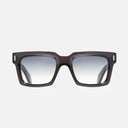
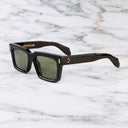
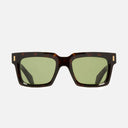
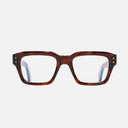
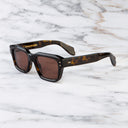
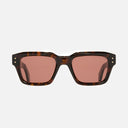
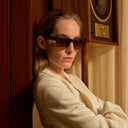
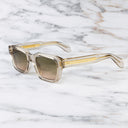
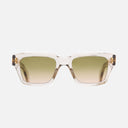
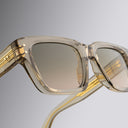
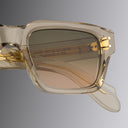
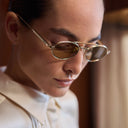
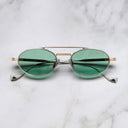
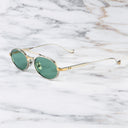
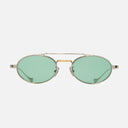
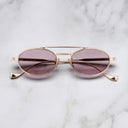
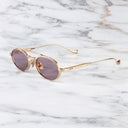
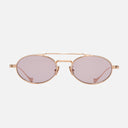
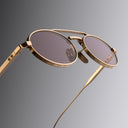
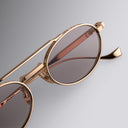
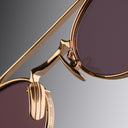
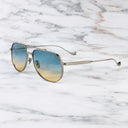
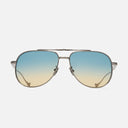
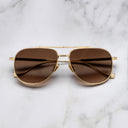
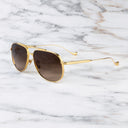
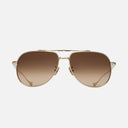
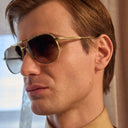
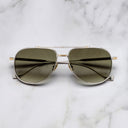
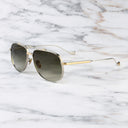
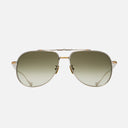
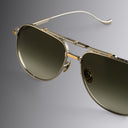
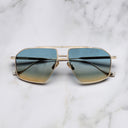
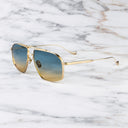
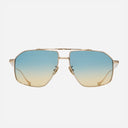
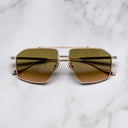
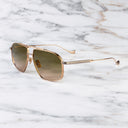
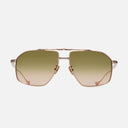
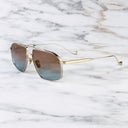
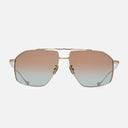
Marking 55 years of design know-how since opening the first London store at 16 Knightsbridge Green, Cutler and Gross is proud to commemorate the occasion with a signature celebration: the Knightsbridge 1971.
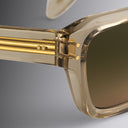
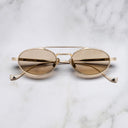
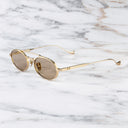
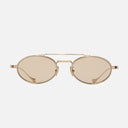
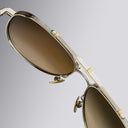
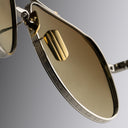
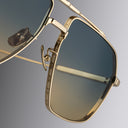
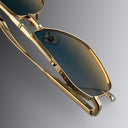
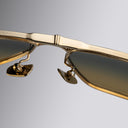
This highly exclusive sunglass pushes our design legacy into new territory, meticulously handcrafted from pure titanium by expert artisans in Sabae Japan. A symbol of honour, this anniversary edition balances our celebrated British craftsmanship with the engineered strength, precision, and artistry of titanium.
Presented in highly limited quantities of only 55 frames, it comes individually finished with a bespoke edition number, ensuring it is not just worn but cherished as a part of our history.
Shop The Knightsbridge 1971 Sunglass
































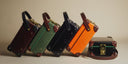


For The Curious, For Fifty-Five
In 1971, Mr Graham Cutler and Mr Tony Gross first unlocked the doors to 16 Knightsbridge Green. Unbeknownst to them, the small yet mighty store and workshop would unmistakably shape the language of eyewear, 55 years on.
Taste and Technicality
The eponymous founders Mr Cutler and Mr Gross first met at Northampton College in London through a shared optometry course. While they both saw eye-to-eye with ocular health and held a penchant for exceptional craft, the pair spoke two very different, yet distinct design languages.
Mr Cutler’s signature is owed to refined eyewear, always insisting he was the technicality of the two. He worked with creatives and professionals deemed the best of their respected fields, and tailored his work towards those after a frame more refined, slighter, and modest. Mr Gross on the other hand had a methodology on the more curious side—mischievous some will even say. He brought a creative flair to his work, initially sourcing and selling vintage frames to his inner circle and the likes of rockstars, musicians, and artists who looked to him for eyewear that didn’t go unnoticed.
When they graduated in 1963, Mr Cutler remained at college as a research assistant and Mr Gross went on to set up shop in his own consulting room in North London. Over time their frustrations grew with the range of glasses on offer as NHS standard, Mr Gross notoriously stating they were “boring, unsuitable or just plain ugly.”.
When the pair came to this collective realisation, they agreed to pool resources and open their first location at 16 Knightsbridge Green in London, after chancing across a former hairdresser’s shop and bringing on board George Smith as their frame maker, and his wife Franny. George began his career at the Prince eyewear factory, a place where many UK opticians sourced their frames at the time. Among the production lines, a handful of pieces stood out from the crowd, clearly made by someone who cared deeply about what they were doing. Tony and Graham traced that trail back to George and were quick to recruit him to their humble shop in Knightsbridge.
He worked slowly and by hand, layering sheets of colour, cutting each frame with a jigsaw, carving grooves, drilling for hinges and lenses, then tumbling them smooth in polishing barrels. After assembling, each frame moved to the final stage where his wife Franny hand-tinted lenses and polished each style to its finished form.
Marie Wilkinson, Cutler and Gross Style Director
A decade later, Marie Wilkinson joined the collective in 1983 as a pre-registered optician and has been part of the Cutler and Gross story ever since. Marie was first recommended for the job by a friend at dispensing optician college, who told her what an eccentric Mr Gross was, and knew the role would suit her perfectly. Over the years, Marie became a close friend of founders Mr Cutler and Mr Gross, and lived through the brand’s most prolific years—travelling the world to showcase designs, proudly presenting cutting-edge eyewear, and later serving as Design Director from 2000-2017 and now the Style Director. At the time, the team were witness to the rise of Cutler and Gross in leading magazines, including Vogue, Harper’s Bazaar, and Marie Claire. “The early 1970s were a time of reinvention, and Cutler and Gross dressed the faces of the people who were responsible.” Marie recalls. 16 Knightsbridge Green has always had an air quite like a private members’ club: intimate and brimming with a close-knit clientele of visionaries and luminaries alike. Today, as Style Director, Marie continues to shape this story, bringing decades of experience and emotion to everything we do.
Beyond Bricks and Mortar
Cutler and Gross has never been just a store. Since the very first day, each location has offered an experience similar to that of walking into a gallery, admiring over half a century of craft and design.
When opening the Knightsbridge store, Mr Cutler and Mr Gross knew their eye for excellence would exceed far beyond the standard shopfront and sought the help of an acquaintance, Piers Gough CBE RA. A training architect at the time, Piers originally knew Tony Gross from their overlapping circles, with mutual friends like painter Patrick Heron CBE, potter Carol McNicholl, and columnist and editor, Janet Street Porter in the swinging 60s.
When they first joined up, Piers was the obvious recruit who presented a number of speculative designs for the small, cul-de-sac shop. A far cry from what was ‘trending’ at the moment, he was tasked with the feat of making the first ever Cutler and Gross store bridge the gap between bold and playful eyewear, and the more serious side of medical eye health.
Piers Gough CBE RA
“I had not tackled an optician before. Tony and Graham felt that the ‘clinical look’ for an eye exam room was intimidating and sometimes panicked patients into giving hurried answers. A more study-like space was envisaged.” Piers stated. “The shop however was to be a minimal background to the bold eyewear. This was a distinct contrast to other opticians who tended to have rather stuffy, over-decorated shops. Now they’ve all learnt to let the specs do the talking!”.
Upon stepping foot inside 16 Knightsbridge Green, it becomes apparent that nothing competes with the eyewear. The minimal interior meant carefully curated rows of sunglasses and opticals could take centre stage with little to no in-store branding and a small counter bringing lightness to the room.
However, around back lies a new calibre of space—the eye exam room—that steers clear from the clinical, and embraces the curious. Floor-to-ceiling plywood graces the walls in a warm ochre tone, contrasted by silver sheets of perforated metal, vivid red trims, and matching carpet. “The 60s Pop Art years meant there was interest in non-traditional, even ‘vulgar’ materials from industrial and vehicle design worlds.” Piers explains. Proving that bold eyewear extends far beyond the frame of vision.
A Treasure Trove
A hidden time capsule in the heart of London, 16 Knightsbridge Green is its own treasure trove and showcase of few prized possessions. Optometrist Salvatore Scinaldi has been with Cutler and Gross for over 25 years, and recalls a history as suave as the clientele he has seen through the doors. From creatures of habit who have gravitated towards the same style of opticals for many years, to those who dare to explore the different hues, textures, and silhouettes of sunglasses on offer. Each frame tells a story as unique as each customer.
Piers Gough CBE RA
Cast your gaze past the modern instruments for eye exams and original Snellen eye chart and onto the wooden case where interests are instantly piqued. Graham Cutler’s antique optometrist set lies with pride of place, first purchased in the 1960s while he worked at an opticians on Regent Street. The case displays a collection of lens inserts and examination glasses originating from the late Victorian period, and used daily by himself, Mr Gross, and now Salvatore as a reminder that Cutler and Gross’s history will always be steeped in functionality and beauty.
Tucked behind the door lies a small but mighty framed accolade gifted in 1989—The Queens Award, recognising Cutler and Gross’s export excellence in the field of sunglasses. At the time experimenting with bold optical design was unprecedented, but sunglasses were an uncharted territory used as a necessity by those looking to protect their eyes. They quickly grew into a reflection of individuality, where names like Bono and Elton John were rarely seen without their Cutler and Gross sunglasses, indoors and out.
Every corner and detail in the original Knightsbridge store holds 55 years of stories, even down to the sink in the eye exam room, which hails from the Barbican Estate. Once regarded purely as a brutalist housing complex, the Barbican now stands as a turning point in architectural appreciation and a testament to lasting design and London roots—akin to Cutler and Gross.
Marking a Milestone
“Classic and timeless are phrases much bandied about and often are equated with conventional and plain. What is so remarkable about Graham Cutler and Tony Gross, and the shop’s subsequent work is that it is so strong, characterful, witty, and idiosyncratic. Yet still brilliantly desirable now and much copied.” Piers shares.
Each frame tried on, consultation had, and conversation carried out, through to the halcyon days and long-forgotten arguments, has played a part. The moments shared within the walls of 16 Knightsbridge Green have shaped a legacy of craftsmanship, creativity, and individuality.
A legacy that lives on not only in the designs carried forward today, but as a testament to the curious, considered spirit of Cutler and Gross. A spirit that will never fade.
Introducing the Knightsbridge 1971 Sunglass
Marking 55 years of design know-how since opening the first London store at 16 Knightsbridge Green, Cutler and Gross is proud to commemorate the occasion with a signature celebration: the Knightsbridge 1971.
This highly exclusive sunglass pushes our design legacy into new territory, meticulously handcrafted from pure titanium by expert artisans in Sabae Japan. A symbol of honour, this anniversary edition balances our celebrated British craftsmanship with the engineered strength, precision, and artistry of titanium.
Presented in highly limited quantities of only 55 frames, it comes individually finished with a bespoke edition number, ensuring it is not just worn but cherished as a part of our history.
Shop The Knightsbridge 1971 Sunglass