The In Conversation series celebrates the stories and style of pioneers across the creative industries. We explore their craft, from beginnings to breakthroughs, and uncover how their Cutler and Gross frames mirror their unique aesthetic.
Creative by Document Studios | Photography by Aniella Weinberger | Art direction by David Hellqvist | Interview by Maisie Taylor
Cutler and Gross recently sat down with Reino Lehtonen-Riley, Creative Director and Head Designer at the London-based cult jeweller, The Great Frog. We explored how he keeps the brand relevant with today’s pressure of contemporary culture, while honouring its rebellious, family founding. We chat about heritage, the balance between tradition and innovation and why his dad penned the comical, albeit attention-grabbing name “The Great Frog” in the 70s.
CG: Do you want to start by telling us where the name The Great Frog came from?
RLR: It's kind of a long story and it differs depending on who tells it. Back in the 70s my dad was really into West Coast stoner comics. One featured a hippy who was on an acid trip, questioning his galaxy and the world around him. While floating through space he happens upon this large frog deity and asks the question, what's the meaning of life? The deity responds that “All the waters of the earth are contained within the armpit of The Great Frog.” and that stuck with my dad and resonated with him for some reason.
 Reino photographed in The Great Frog's original, and still much-loved workshop.
CG: Can you tell us a bit about your parents and why they opened the shop?
RLR: I think it was somewhat of an accident and a bit of necessity.
The music they were into in the 70s and 80s was a lot heavier, but the term ‘heavy metal’ hadn’t really been coined yet. There were skull motifs, daggers, swords, animals and this crowd that no one was catering for whatsoever. Bands that were emerging at the time and people like Lemmy [lead singer of Motörhead] and guys from Iron Maiden would wear second world war relics or antiques and the occasional skull ring that would be on the market. There was always a theme of ‘memento mori’ but shops that catered towards it were few and far between.
My mum and dad found and bought jewellery from other countries they visited and decided to repair and resell these pieces, then started getting requests from people saying “I’d like a skull ring, can you do that?” and my dad thought “ I guess I'll give it a go”. From there it was learning the craft. He wasn't a jeweller to begin with, but there was a need and people were asking for it.
It was also his style, he wore loads of jewellery, rings on every finger and had long hair and loved that look. It was such a signature for him and others wanted to emulate that. As heavy metal grew in popularity, The Great Frog would be spotlighted because musicians would wear it on stage. The rest is history.
CG: How has practically growing up in the Soho shop shaped how you build The Great Frog as a brand today?
RLR: Spending most of my time in Soho as a kid really helped me see all London had to offer. It was an escape from the suburbs and really opened my eyes to the diversity and the particular subcultures that grew out of central London. It was a real education, experiencing the vibrancy of the best city in the world. There really was a sense of optimism and a sense of a world stage, it encouraged me to think globally whilst still being rooted in what is uniquely London, that eclectic mix styles and fashion that comes from a melting pot of cultures all being closely knit and packed together in a small space, you could be anything you wanted and Soho gave me the cultural vocabulary to dream big to make The Great Frog more than just a small jewellery shop, but to show the best London had to offer globally.
 A jewellers bench in the workshop, below the London Soho store at 10 Ganton Street.
CG: Did you train as a jeweller then or did you learn through family and watching?
RLR: I didn't train formally as a jeweller, but working in The Great Fog was the best education I could have had. From the age of 10, I was sat on a jewellery bench and was immersed in it. Jewellery design and making was always around me, all the stones, all the materials, all the tools, and surrounded by very capable jewellers through the years. Even to this day, we have new people working for us and because I'm not formally trained, I constantly pick up techniques from the people I work with. Making jewellery is something you can never get bored of; there's a constant learning curve.
"Making jewellery is something you can never get bored of; there's a constant learning curve."
Reino Lehtonen-Riley, Creative Director and Head Designer
CG: Your pieces tell stories, whether that be by a happy accident, inspiration from artists or original designs by family members. How do you decide which stories are worth translating into jewellery?
RLR: All of our pieces tell a story, which are led and informed largely by our customers in the early days and of course the music scenes that The Great Frog was very much a part of. There were always artists touring and playing gigs in London from all over the world, habitually making a stop into the only rock n roll jewellers in London—it was a real destination before the availability of online shopping. Relationships were formed over many years and there was always impromptu gigs in the basement and above the shop after hours, ideas and designs were scribbled down on bits of paper during late night jam sessions and translated into jewellery, either by accident or choice, it shaped the image of the brand and that ethos still informs the designs of today.
Reino at the jewellers bench in the original workshop of The Great Frog.
CG: You have an expansive history with notable punk and rock artists but have also collaborated with a lot with pop artists recently. Is this still part of the brand's DNA?
RLR: Do you know what? I really love what's happening at the moment with the sort of cross-pollination of different genres, music and fashion. There was something cool about ‘you were a punk’ or ‘you were a rocker’, but that's never been me. I grew up in London and spent my whole life listening to music from different scenes and being part of these worlds. Whether it's from early days of jungle to dance and hip-hop to metal to black metal—I've loved to always cross those genres. To be stuck in one particular thing for your whole life… I just find it really boring, to be honest.
I think I'm really open to life, I love finding new music, genres and aesthetics. It keeps me excited in what I’m doing design wise and with the brand because if we were just still catering to 50-year-old rockers it wouldn’t be the same. It's so heartening for me to see how a younger generation has really embraced what we do. This diversity resonates not only with our core customer but has brought a whole slew of fans and I'm very lucky to be able to take everyone with me on the journey of The Great Frog.
CG: What kind of relationship do you want with the people who wear your jewellery?
RLR: The jewellery we make is about the stories. It’s about a feeling, it’s about being part of something, part of a club. I feel like every time I see someone wearing The Great Frog I almost want to go up to them and have a chat, find out the story and why they chose a particular piece. Jewellery is so personal and many people feel naked without it on, it becomes part of them. It’s such a humbling feeling to know that you have created something that plays a significant part in people’s lives.
CG: What makes Cutler and Gross X The Great Frog special to you?
RLR: Our work is so special to me as Cutler and Gross embody the same ethos of craft heritage and family, they have stood the test of time by being first and foremost about an incredible product. Cutler and Gross create designs that also becomes very much a part of the wearer, using the best materials produced the traditional way by artisans with quality being at the heart of everything they do. There was no other choice of eyewear company to work with and the whole team has become like family. I’m immensely proud of what we have created together.
"Every time I see someone wearing The Great Frog I almost want to go up to them and have a chat, find out the story and why they chose a particular piece. Jewellery is so personal..."
Reino Lehtonen-Riley, Creative Director and Head Designer
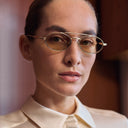
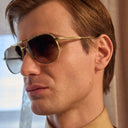
Reino wearing the Cutler and Gross X The Great Frog Capri Sunglass in Havana.
CG: What does responsible craft look like for The Great Frog?
RLR: Craft is very much at the forefront of what we do, and I feel we are responsible for showing how it can be done. We are not fast fashion and we are not trend-led and by the nature of the craft everything is recycled, it’s a slow process and we keep true to what we have always done, creating jewellery that will last a lifetime. I design with the next generation in mind, I feel we are creating heirlooms to be passed down, to be worn in, to get better with age, creating zero landfill as the world is at peak stuff!
The Great Frog flagship store first opened in London by Reino's parents in 1972.
CG: Do you hope to see your kids working for the family business?
RLR: I have this slight hope that they might take it on, but I also wouldn't want to burden them with it. With me, it always felt like it was my destiny… like ‘this is what you're going to do.’ I almost wonder what I would have done had I not been in the family business.
I originally went into industrial engineering and product design at university and wanted to work in the automotive industry. Maybe I would have done that, but in a way I am still doing a similar job albeit on a smaller scale, the technical and engineering side of things is still there.
For my kids, I'd love to see how they develop into their own interests. If they want to go into the family business I'd love it and be really flattered. But I think we all go through a period of time where your parents are massively embarrassing and you don't want anything to do with them. Then you grow up and realise it’s actually pretty cool, I'm kind of into it. There is a slight hope that it would be continued, and it would be a lovely lineage. But who knows? That’s up to them.
"I design with the next generation in mind, I feel we are creating heirlooms to be passed down, to be worn in, to get better with age..."
Reino Lehtonen-Riley, Creative Director and Head Designer
![]()
 A medley of sterling silver chains in The Great Frog workshop.
CG: If you could summarise ‘The Great Frog’ in three words, what would they be?
RLR: To summarise The Great Frog in three words is difficult as it means so many things to different people but at a push it would be craft, style and heritage. Depending on the day, it could also be hard work, stress and co-dependency(!).
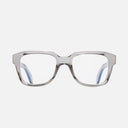
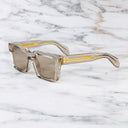
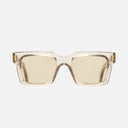
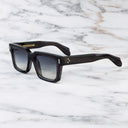
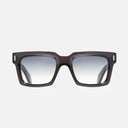
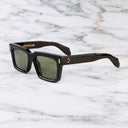
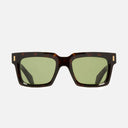
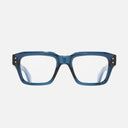
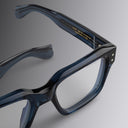
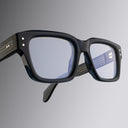
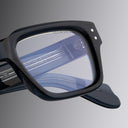
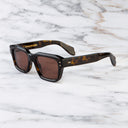
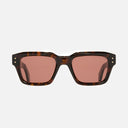
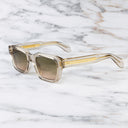
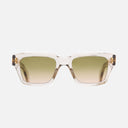
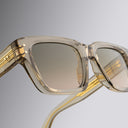
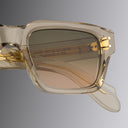
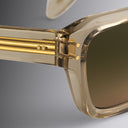
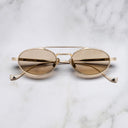
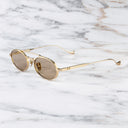
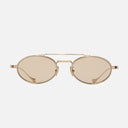
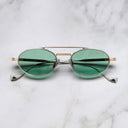
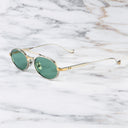
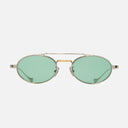
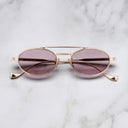
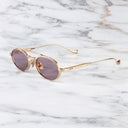
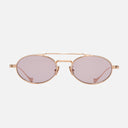
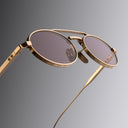
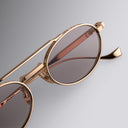
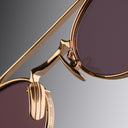
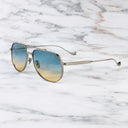
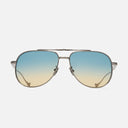
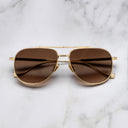
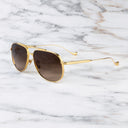
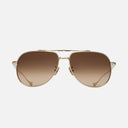
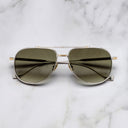
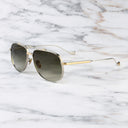
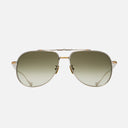
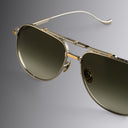
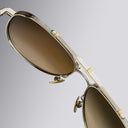
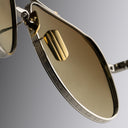
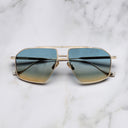
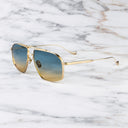
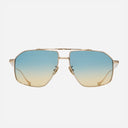
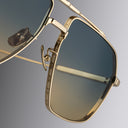
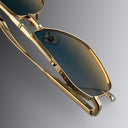
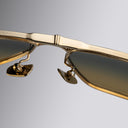
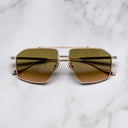
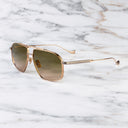
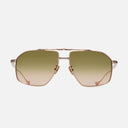
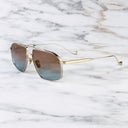
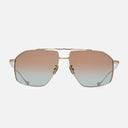
Reino wears the Capri Sunglass in Silver and Havana from the new Cutler and Gross X The Great Frog Modern Relics collection. Each of the six sunglass styles draws on the experimentation of the 70s and bohemian travels afar, inspired by heritage jewellery and the spirit of trailblazers of the era.
Shop Cutler and Gross X The Great Frog




































In Conversation: Reino Lehtonen-Riley
The In Conversation series celebrates the stories and style of pioneers across the creative industries. We explore their craft, from beginnings to breakthroughs, and uncover how their Cutler and Gross frames mirror their unique aesthetic.
Creative by Document Studios | Photography by Aniella Weinberger | Art direction by David Hellqvist | Interview by Maisie Taylor
Cutler and Gross recently sat down with Reino Lehtonen-Riley, Creative Director and Head Designer at the London-based cult jeweller, The Great Frog. We explored how he keeps the brand relevant with today’s pressure of contemporary culture, while honouring its rebellious, family founding. We chat about heritage, the balance between tradition and innovation and why his dad penned the comical, albeit attention-grabbing name “The Great Frog” in the 70s.
CG: Do you want to start by telling us where the name The Great Frog came from?
RLR: It's kind of a long story and it differs depending on who tells it. Back in the 70s my dad was really into West Coast stoner comics. One featured a hippy who was on an acid trip, questioning his galaxy and the world around him. While floating through space he happens upon this large frog deity and asks the question, what's the meaning of life? The deity responds that “All the waters of the earth are contained within the armpit of The Great Frog.” and that stuck with my dad and resonated with him for some reason.
CG: Can you tell us a bit about your parents and why they opened the shop?
RLR: I think it was somewhat of an accident and a bit of necessity.
The music they were into in the 70s and 80s was a lot heavier, but the term ‘heavy metal’ hadn’t really been coined yet. There were skull motifs, daggers, swords, animals and this crowd that no one was catering for whatsoever. Bands that were emerging at the time and people like Lemmy [lead singer of Motörhead] and guys from Iron Maiden would wear second world war relics or antiques and the occasional skull ring that would be on the market. There was always a theme of ‘memento mori’ but shops that catered towards it were few and far between.
My mum and dad found and bought jewellery from other countries they visited and decided to repair and resell these pieces, then started getting requests from people saying “I’d like a skull ring, can you do that?” and my dad thought “ I guess I'll give it a go”. From there it was learning the craft. He wasn't a jeweller to begin with, but there was a need and people were asking for it.
It was also his style, he wore loads of jewellery, rings on every finger and had long hair and loved that look. It was such a signature for him and others wanted to emulate that. As heavy metal grew in popularity, The Great Frog would be spotlighted because musicians would wear it on stage. The rest is history.
CG: How has practically growing up in the Soho shop shaped how you build The Great Frog as a brand today?
RLR: Spending most of my time in Soho as a kid really helped me see all London had to offer. It was an escape from the suburbs and really opened my eyes to the diversity and the particular subcultures that grew out of central London. It was a real education, experiencing the vibrancy of the best city in the world. There really was a sense of optimism and a sense of a world stage, it encouraged me to think globally whilst still being rooted in what is uniquely London, that eclectic mix styles and fashion that comes from a melting pot of cultures all being closely knit and packed together in a small space, you could be anything you wanted and Soho gave me the cultural vocabulary to dream big to make The Great Frog more than just a small jewellery shop, but to show the best London had to offer globally.
CG: Did you train as a jeweller then or did you learn through family and watching?
RLR: I didn't train formally as a jeweller, but working in The Great Fog was the best education I could have had. From the age of 10, I was sat on a jewellery bench and was immersed in it. Jewellery design and making was always around me, all the stones, all the materials, all the tools, and surrounded by very capable jewellers through the years. Even to this day, we have new people working for us and because I'm not formally trained, I constantly pick up techniques from the people I work with. Making jewellery is something you can never get bored of; there's a constant learning curve.
Reino Lehtonen-Riley, Creative Director and Head Designer
CG: Your pieces tell stories, whether that be by a happy accident, inspiration from artists or original designs by family members. How do you decide which stories are worth translating into jewellery?
RLR: All of our pieces tell a story, which are led and informed largely by our customers in the early days and of course the music scenes that The Great Frog was very much a part of. There were always artists touring and playing gigs in London from all over the world, habitually making a stop into the only rock n roll jewellers in London—it was a real destination before the availability of online shopping. Relationships were formed over many years and there was always impromptu gigs in the basement and above the shop after hours, ideas and designs were scribbled down on bits of paper during late night jam sessions and translated into jewellery, either by accident or choice, it shaped the image of the brand and that ethos still informs the designs of today.
Reino at the jewellers bench in the original workshop of The Great Frog.
CG: You have an expansive history with notable punk and rock artists but have also collaborated with a lot with pop artists recently. Is this still part of the brand's DNA?
RLR: Do you know what? I really love what's happening at the moment with the sort of cross-pollination of different genres, music and fashion. There was something cool about ‘you were a punk’ or ‘you were a rocker’, but that's never been me. I grew up in London and spent my whole life listening to music from different scenes and being part of these worlds. Whether it's from early days of jungle to dance and hip-hop to metal to black metal—I've loved to always cross those genres. To be stuck in one particular thing for your whole life… I just find it really boring, to be honest.
I think I'm really open to life, I love finding new music, genres and aesthetics. It keeps me excited in what I’m doing design wise and with the brand because if we were just still catering to 50-year-old rockers it wouldn’t be the same. It's so heartening for me to see how a younger generation has really embraced what we do. This diversity resonates not only with our core customer but has brought a whole slew of fans and I'm very lucky to be able to take everyone with me on the journey of The Great Frog.
CG: What kind of relationship do you want with the people who wear your jewellery?
RLR: The jewellery we make is about the stories. It’s about a feeling, it’s about being part of something, part of a club. I feel like every time I see someone wearing The Great Frog I almost want to go up to them and have a chat, find out the story and why they chose a particular piece. Jewellery is so personal and many people feel naked without it on, it becomes part of them. It’s such a humbling feeling to know that you have created something that plays a significant part in people’s lives.
CG: What makes Cutler and Gross X The Great Frog special to you?
RLR: Our work is so special to me as Cutler and Gross embody the same ethos of craft heritage and family, they have stood the test of time by being first and foremost about an incredible product. Cutler and Gross create designs that also becomes very much a part of the wearer, using the best materials produced the traditional way by artisans with quality being at the heart of everything they do. There was no other choice of eyewear company to work with and the whole team has become like family. I’m immensely proud of what we have created together.
Reino Lehtonen-Riley, Creative Director and Head Designer
Reino wearing the Cutler and Gross X The Great Frog Capri Sunglass in Havana.
CG: What does responsible craft look like for The Great Frog?
RLR: Craft is very much at the forefront of what we do, and I feel we are responsible for showing how it can be done. We are not fast fashion and we are not trend-led and by the nature of the craft everything is recycled, it’s a slow process and we keep true to what we have always done, creating jewellery that will last a lifetime. I design with the next generation in mind, I feel we are creating heirlooms to be passed down, to be worn in, to get better with age, creating zero landfill as the world is at peak stuff!
The Great Frog flagship store first opened in London by Reino's parents in 1972.
CG: Do you hope to see your kids working for the family business?
RLR: I have this slight hope that they might take it on, but I also wouldn't want to burden them with it. With me, it always felt like it was my destiny… like ‘this is what you're going to do.’ I almost wonder what I would have done had I not been in the family business.
I originally went into industrial engineering and product design at university and wanted to work in the automotive industry. Maybe I would have done that, but in a way I am still doing a similar job albeit on a smaller scale, the technical and engineering side of things is still there.
For my kids, I'd love to see how they develop into their own interests. If they want to go into the family business I'd love it and be really flattered. But I think we all go through a period of time where your parents are massively embarrassing and you don't want anything to do with them. Then you grow up and realise it’s actually pretty cool, I'm kind of into it. There is a slight hope that it would be continued, and it would be a lovely lineage. But who knows? That’s up to them.
Reino Lehtonen-Riley, Creative Director and Head Designer
CG: If you could summarise ‘The Great Frog’ in three words, what would they be?
RLR: To summarise The Great Frog in three words is difficult as it means so many things to different people but at a push it would be craft, style and heritage. Depending on the day, it could also be hard work, stress and co-dependency(!).
Reino wears the Capri Sunglass in Silver and Havana from the new Cutler and Gross X The Great Frog Modern Relics collection. Each of the six sunglass styles draws on the experimentation of the 70s and bohemian travels afar, inspired by heritage jewellery and the spirit of trailblazers of the era.
Shop Cutler and Gross X The Great Frog