The In Conversation series celebrates the stories and style of pioneers across the creative industries. We explore their craft, from beginnings to breakthroughs, and uncover how their Cutler and Gross frames mirror their unique aesthetic.
Creative by Document Studios | Photography by Aniella Weinberger | Art direction by David Hellqvist | Interview by Maisie Taylor
Cutler and Gross recently paid a visit to Studio Lenca, the pseudonym of contemporary artist Jose Campos. The name combines ‘Studio’ as a place to experiment with ‘Lenca’, a reference to Indigenous Lenca heritage in the region now known as El Salvador. Through paintings, film, sculpture and installations, Jose’s work engages with themes rooted in his Salvadoran heritage.
Amid the salty air and sandy streets of Margate lies TKE Studios, an ex-Victorian bathhouse funded by prolific artist Tracey Emin OBE, and intended for professional artists to converge and create. While this part of the Kent coast is predominantly known for its white chalk cliffs, kitsch Dreamland and sprawling contemporary art scene, the collective at TKE has become a catalyst for some of the most exciting, original and impactful artwork of recent years, Jose among them.
 Artist Jose Campos of Studio Lenca. Photographed in his space at TKE Studios, Margate.
On first glance his work offers a joyful escape from the studio space’s bright white and naturally light surroundings. Upon further look, each piece of work tells a more complex story— one shaped by Jose’s experiences of the civil war in El Salvador in the late 1980s, later growing up undocumented in the United States, and his identity today as an artist and educator.
The colourful paintings of Studio Lenca depict figures proudly wearing wide-brimmed hats and bold vivid outfits that playfully explore masculinity, personal experiences, folkloric imagery and the enduring impact of violence. In-between brush strokes and joyous laughter we chatted through where he turns for inspiration, what fuels his creative process and how important curiosity is.
 'Verde' by Studio Lenca, and sculptures of Our Lady of Guadalupe.
CG: How would you describe what you do to someone you've just met?
SL: I’m an artist, originally from El Salvador and now based in Margate, UK. I work across painting, drawing, sculpture and community practice. I like to tell stories through my work, specifically exploring my experience of being an undocumented immigrant in the United States.
CG: That’s a really important story to be told. On that note, what would you say is the biggest danger for the survival of your work?
SL: I used to be a teacher in South East London, and I saw how it’s becoming harder for young people from working-class backgrounds to go to art school. It’s dangerous when only certain voices are heard and seen, we risk losing vital stories and perspectives that shape craft and culture.
CG: To keep those stories going, how important is curiosity to you and to the world generally speaking?
SL: It’s essential! I want everyone to feel that they can be curious and ask questions. Everything around us is invented, which means we can also deconstruct and reconstruct things. When I trained to be a teacher, I read a lot of bell hooks and Paulo Freire, who both write about curiosity, transgression and disruption. Those ideas continue to guide me.
 Artist Jose Campos of Studio Lenca. Wearing Cutler and Gross X The Great Frog Phantom Sunglasses.
"It’s dangerous when only certain voices are heard and seen, we risk losing vital stories and perspectives that shape craft and culture."
CG: Your studio is brimming with signs of creativity, what is your process like and what fuels it?
SL: I’m inspired by Pedro Almodóvar’s films, Pina Bausch’s choreography and fashion photography. I collect images and ideas, which lead to drawings that evolve into large-scale narrative paintings. Storytelling is at the heart of everything I make and very much part of my creative process.
CG: Can you name a piece of music, art, food or other cultural highlight that inspires you, and why?
SL: I’ve always been a huge fan of Selena Quintanilla. Her music has been a big part of my life—my sister and I used to re-enact her videos in our garage with homemade costumes. Selena represented so much to me in terms of visibility. Her songs bring a sense of place to my studio; they tell stories and make me feel at home, reminding me of my mom dancing in the kitchen while cooking tamales or my tías dancing at a quinceañera.
CG: Can you think of a bold and courageous person, dead or alive, known or unknown?
SL: I was recently lucky enough to meet Madonna. We talked about her early days in New York in the ’90s, when she moved there to pursue her dance career. I also moved to New York at 16 to study at The Ailey School, and I remember feeling inspired but also precarious, with very little money. Hearing her story and how she overcame adversity as a young person was incredibly inspiring.
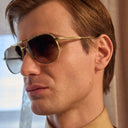
 'EXISTIMOS' by Studio Lenca. Wearing Cutler and Gross 0002 Aviator Sunglasses.
"The best thing about my job is seeing how people connect with my work. It’s amazing how art can create a sense of belonging."
CG: When are you the most creative: early mornings or late evenings?
SL: It varies. My studio has these huge skylights, and the light in Margate is always changing. Sometimes I’m inspired by the bright early sunshine in summer, other times it’s the moody late afternoons of autumn. I don’t really have a set time that works best for me.
CG: What innovation yet to come would improve your day or life the most?
SL: I would love a time machine, it would be incredible to go back and meet some of the people who’ve really inspired me. I’d love to improvise alongside John Cage, talk about colour with Howard Hodgkin and hear stories from Frida Kahlo.
CG: What is the best and worst thing about your job?
SL: The best thing about my job is seeing how people connect with my work. It’s amazing how art can create a sense of belonging. The worst part is washing brushes, I was never formally trained as an artist, so I’m still learning how to do it properly!
 An inside glimpse at Studio Lenca's space at TKE Studios, Margate.
CG: What are you working on now?
SL: I’m currently working on a project for MoMA PS1 called Rutas, a cross-national, community-engaged initiative inspired by lived experiences of displacement. The project invites individuals who have navigated the U.S. immigration system to share their stories through painting. Together, these works form an archive of migration, an unrecorded yet vital chapter in the history of the United States.
As part of Rutas, we’ll gather to talk, paint, and eat together in a series of workshops within a group exhibition titled LA ESCUELA___, a collective learning space that explores pedagogies and practices from across Latin America and diaspora communities. All the artists in the show foreground social action and the legacies of artist-run spaces by examining how they work in solidarity with their communities.
Rutas is a chance to challenge the colonial legacies embedded in mapping and geography, celebrating diverse forms of knowledge and representation. It’s incredibly exciting to create spaces where dialogue, collective learning, and visibility can emerge.
 Artist Jose Campos of Studio Lenca, photographed in front of his painting 'Olivo'.
Jose’s work is ultimately an invitation for viewers to look closer at the vital stories and perspectives that shape our world. In his paintings, performance and work within the community,
From his early days dancing to Selina with his sister in San Francisco to his recent “Rutas” painting workshops at MoMA PS1, Jose has always centered his life around creating spaces where those who have been left out of many narratives can finally be seen, and have their voices heard.
 An artists space, paintbrushes and tools pride of place in Jose's studio.
Stepping foot into Studio Lenca’s world Jose reminds us that art is never just a first glance, but deeper storytelling of resistance and homecoming.
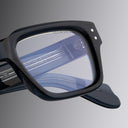
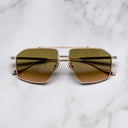
Based in a quintessential Kent seascape, it’s no wonder where painter J.M.W. Turner gained references for some of the most notable ‘Turner Skies’ of the art world. In a place where the natural light is forever changing, sunglasses transcend function and start to become a form of expression for many. Jose's go-tos of late have been The Great Frog Phantom Square Sunglasses in Black on Red alongside the 0002 Aviator Sunglasses in 18K Rose Gold. Two wildly different Cutler and Gross styles but reflecting their own narrative.
A heartfelt thank you to Jose for welcoming our team to your coastal haven, and for your conversation, transparency and humour. Discover his work on studiolenca.com and @studiolenca.
















































































































In Conversation: Studio Lenca
The In Conversation series celebrates the stories and style of pioneers across the creative industries. We explore their craft, from beginnings to breakthroughs, and uncover how their Cutler and Gross frames mirror their unique aesthetic.
Creative by Document Studios | Photography by Aniella Weinberger | Art direction by David Hellqvist | Interview by Maisie Taylor
Cutler and Gross recently paid a visit to Studio Lenca, the pseudonym of contemporary artist Jose Campos. The name combines ‘Studio’ as a place to experiment with ‘Lenca’, a reference to Indigenous Lenca heritage in the region now known as El Salvador. Through paintings, film, sculpture and installations, Jose’s work engages with themes rooted in his Salvadoran heritage.
Amid the salty air and sandy streets of Margate lies TKE Studios, an ex-Victorian bathhouse funded by prolific artist Tracey Emin OBE, and intended for professional artists to converge and create. While this part of the Kent coast is predominantly known for its white chalk cliffs, kitsch Dreamland and sprawling contemporary art scene, the collective at TKE has become a catalyst for some of the most exciting, original and impactful artwork of recent years, Jose among them.
On first glance his work offers a joyful escape from the studio space’s bright white and naturally light surroundings. Upon further look, each piece of work tells a more complex story— one shaped by Jose’s experiences of the civil war in El Salvador in the late 1980s, later growing up undocumented in the United States, and his identity today as an artist and educator.
The colourful paintings of Studio Lenca depict figures proudly wearing wide-brimmed hats and bold vivid outfits that playfully explore masculinity, personal experiences, folkloric imagery and the enduring impact of violence. In-between brush strokes and joyous laughter we chatted through where he turns for inspiration, what fuels his creative process and how important curiosity is.
CG: How would you describe what you do to someone you've just met?
SL: I’m an artist, originally from El Salvador and now based in Margate, UK. I work across painting, drawing, sculpture and community practice. I like to tell stories through my work, specifically exploring my experience of being an undocumented immigrant in the United States.
CG: That’s a really important story to be told. On that note, what would you say is the biggest danger for the survival of your work?
SL: I used to be a teacher in South East London, and I saw how it’s becoming harder for young people from working-class backgrounds to go to art school. It’s dangerous when only certain voices are heard and seen, we risk losing vital stories and perspectives that shape craft and culture.
CG: To keep those stories going, how important is curiosity to you and to the world generally speaking?
SL: It’s essential! I want everyone to feel that they can be curious and ask questions. Everything around us is invented, which means we can also deconstruct and reconstruct things. When I trained to be a teacher, I read a lot of bell hooks and Paulo Freire, who both write about curiosity, transgression and disruption. Those ideas continue to guide me.
CG: Your studio is brimming with signs of creativity, what is your process like and what fuels it?
SL: I’m inspired by Pedro Almodóvar’s films, Pina Bausch’s choreography and fashion photography. I collect images and ideas, which lead to drawings that evolve into large-scale narrative paintings. Storytelling is at the heart of everything I make and very much part of my creative process.
CG: Can you name a piece of music, art, food or other cultural highlight that inspires you, and why?
SL: I’ve always been a huge fan of Selena Quintanilla. Her music has been a big part of my life—my sister and I used to re-enact her videos in our garage with homemade costumes. Selena represented so much to me in terms of visibility. Her songs bring a sense of place to my studio; they tell stories and make me feel at home, reminding me of my mom dancing in the kitchen while cooking tamales or my tías dancing at a quinceañera.
CG: Can you think of a bold and courageous person, dead or alive, known or unknown?
SL: I was recently lucky enough to meet Madonna. We talked about her early days in New York in the ’90s, when she moved there to pursue her dance career. I also moved to New York at 16 to study at The Ailey School, and I remember feeling inspired but also precarious, with very little money. Hearing her story and how she overcame adversity as a young person was incredibly inspiring.
CG: When are you the most creative: early mornings or late evenings?
SL: It varies. My studio has these huge skylights, and the light in Margate is always changing. Sometimes I’m inspired by the bright early sunshine in summer, other times it’s the moody late afternoons of autumn. I don’t really have a set time that works best for me.
CG: What innovation yet to come would improve your day or life the most?
SL: I would love a time machine, it would be incredible to go back and meet some of the people who’ve really inspired me. I’d love to improvise alongside John Cage, talk about colour with Howard Hodgkin and hear stories from Frida Kahlo.
CG: What is the best and worst thing about your job?
SL: The best thing about my job is seeing how people connect with my work. It’s amazing how art can create a sense of belonging. The worst part is washing brushes, I was never formally trained as an artist, so I’m still learning how to do it properly!
CG: What are you working on now?
SL: I’m currently working on a project for MoMA PS1 called Rutas, a cross-national, community-engaged initiative inspired by lived experiences of displacement. The project invites individuals who have navigated the U.S. immigration system to share their stories through painting. Together, these works form an archive of migration, an unrecorded yet vital chapter in the history of the United States.
As part of Rutas, we’ll gather to talk, paint, and eat together in a series of workshops within a group exhibition titled LA ESCUELA___, a collective learning space that explores pedagogies and practices from across Latin America and diaspora communities. All the artists in the show foreground social action and the legacies of artist-run spaces by examining how they work in solidarity with their communities.
Rutas is a chance to challenge the colonial legacies embedded in mapping and geography, celebrating diverse forms of knowledge and representation. It’s incredibly exciting to create spaces where dialogue, collective learning, and visibility can emerge.
Jose’s work is ultimately an invitation for viewers to look closer at the vital stories and perspectives that shape our world. In his paintings, performance and work within the community,
From his early days dancing to Selina with his sister in San Francisco to his recent “Rutas” painting workshops at MoMA PS1, Jose has always centered his life around creating spaces where those who have been left out of many narratives can finally be seen, and have their voices heard.
Stepping foot into Studio Lenca’s world Jose reminds us that art is never just a first glance, but deeper storytelling of resistance and homecoming.
Based in a quintessential Kent seascape, it’s no wonder where painter J.M.W. Turner gained references for some of the most notable ‘Turner Skies’ of the art world. In a place where the natural light is forever changing, sunglasses transcend function and start to become a form of expression for many. Jose's go-tos of late have been The Great Frog Phantom Square Sunglasses in Black on Red alongside the 0002 Aviator Sunglasses in 18K Rose Gold. Two wildly different Cutler and Gross styles but reflecting their own narrative.
A heartfelt thank you to Jose for welcoming our team to your coastal haven, and for your conversation, transparency and humour. Discover his work on studiolenca.com and @studiolenca.