The In Conversation series celebrates the stories and style of pioneers across the creative industries. We explore their craft, from beginnings to breakthroughs, and uncover how their Cutler and Gross frames mirror their unique aesthetic.
Creative by Document Studios | Photography by Jack Orton | Art direction by David Hellqvist | Interview by Maisie Taylor
Cutler and Gross recently sat down with Fergus Henderson OBE, British chef and founder of St. JOHN restaurant. We explored his lifelong philosophy around simplicity, craftsmanship and modern British identity, in food and beyond.
Fergus Henderson first pioneered the nose-to-tail dining movement in the early 90s with the opening of St. JOHN, which transformed British cuisine. Rooted in a philosophy of using every part of the animal, from bone marrow to pig's trotters, nose-to-tail was as much a cultural statement as a culinary one. This philosophy of his championed honesty, resourcefulness, and a deep respect for ingredients at a time when British cooking was finding its feet. As a catalyst for this movement, he went on to inspire a generation of chefs worldwide, cementing a place as one of the most quietly radical figures in modern food. Though he's recently stepped back from the kitchen pass, his influence continues to shape the broader culinary world. As a long-time customer and friend of the brand, Fergus has an instinct for enduring quality that mirrors Cutler and Gross's own ethos—bringing a fresh simplicity to timeless design.
We met on a crisp autumnal day at Rochelle Canteen in East London, a restaurant owned by the warm and welcoming chef Margot Henderson OBE, Fergus’ wife. As lunch service hummed along in the background under the Canteen’s grape vine-woven canopy, he tucked into a pork and prune terrine in between our conversation on craft, quality and the merits of a ‘spurtle’.
 Fergus Henderson OBE dining at Rochelle Canteen.
CG: It’s often said your philosophy is centred around simplicity, what does this actually mean to you, and how do you stop simple from becoming sterile?
FH: Simple is not easy, it can sometimes come across as one doesn’t care, when it actually needs much consideration, love and care. Especially with nose-to-tail cooking, simplicity is a moral term here. Nothing is wasted, and everything is respected. To me, roast bone marrow and parsley salad is simple perfection. An Aalto stool also stands out. I prefer restraint over flourish, where the craft is in doing less, but doing it perfectly.
CG: Cutler and Gross’s devotion to craftsmanship feels apparent with St. JOHN, parallel in terms of careful consideration in what you do. What makes something truly well made to you?
FH: Function, form, no frippery, and clear ideas about what it's for—I love tools for this reason. You must have patience and respect for the process, and let things speak for themselves and what they are, don’t try to hide their nature.
"I prefer restraint over flourish, where the craft is in doing less, but doing it perfectly."
Fergus Henderson OBE, British Chef and Former St. JOHN Restaurateur
 Fergus Henderson OBE, British Chef and Former St. JOHN Restaurateur. Wearing the GR15 Aviator Optical in Multi Havana.
CG: St. JOHN has influenced a lot of notable dining globally and more recently has collaborated with clothing brands. The white coats, striped aprons, signature and well-loved chore coats and your iconic round glasses. Did you intend to create this strong visual identity?
FH: I have always loved workwear and the strong architecture of it. When Margot [Henderson] and I opened The French House Dining Room in 1992 I insisted the waiters wear patrol jackets. It makes them like sentinels—someone for the guests to look up to and have respect for in the dining room.
A uniform has always been important to me, it has structure, sureness and looks great.
CG: You’ve helped define what British food looks like. What does “modern Britishness” mean to you now?
FH: It's defined by the rich cultural diversity that we are all a part of, this includes British culture of the past and now. It’s exciting to see what comes out of it, but also good to remember the old ways, traditional food that was cooked by mothers and women in the counties.

![]() Fergus Henderson OBE dining at Rochelle Canteen.
Fergus Henderson OBE dining at Rochelle Canteen.
"Like anything, care and quality start at the source and don’t go unnoticed."
Fergus Henderson OBE, British Chef and Former St. JOHN Restaurateur
CG: Do you believe there is an oversaturated use of terms like ‘Quality British’?
FH: It often seems that the term can be oversaturated and I put that down to journalism, they love to cling on to it. But also, it’s good to push what is made here, Genius Loci where we are in this place and time.
CG: How does your relationship with suppliers (farmers, butchers, fishermen) influence your appreciation towards the quality and care of ingredients?
FH: I have always said make friends with your butcher and life will be better. The suppliers we have are hugely important to us, our menu reflects their produce and of course the changing seasons. Farmer Tom brings us animals from Wales and Shropshire, and generally all grass fed original breeds and of beautiful tasting meat with great fat. Fat being so important for flavour, cooking and health. Like anything, care and quality start at the source and don’t go unnoticed.
 In the garden at Rochelle Canteen. Wearing the GR15 Aviator Optical in Multi Havana.
CG: What is your ingredient go-to? And a kitchen tool go-to?
FH: Trotter Gear is essential. I also love a spurtle—a wooden tool dating back to the 15th century, simple and uncomplicated, designed for stirring.
CG: And what is your favourite rule to break in the kitchen?
FH: Never dice, if God wanted square vegetables he or she would have made them.
 In the garden at Rochelle Canteen. Wearing the GR15 Aviator Optical in Multi Havana.
CG: You speak about food with an air of nostalgia. What’s a memorable meal you had as a child?
FH: My mother would make tripe and onions, braised slowly in milk and served with mash. She grew up in Bolton, and this was a dish from her childhood. They enjoyed tripe there and so inherently I always enjoy a plate of tripe too.
CG: You naturally seem open to curiosity and exploration in what you do. How important is curiosity, to you and the world generally?
FH: Curiosity is about look and understanding, it means respecting the process and not pretending. Simply put, in cooking, if we kill a whole animal it would be rude not to use the whole beast.
"Never dice, if God wanted square vegetables he or she would have made them."
Fergus Henderson OBE, British Chef and Former St. JOHN Restaurateur
 Fergus Henderson OBE dining at Rochelle Canteen.
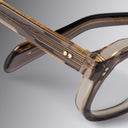
Fergus and his long-time business partner Trevor Gulliver have worn Cutler and Gross eyewear for years—Fergus first shopping his notable frames in the Knightsbridge store in the early 80s. His signature opticals were always at special request, selecting the perfect symmetry of the rounded 0105 and adapting the temples to feature a bespoke ‘cable curl’. This personalised design was crafted from rolled gold wire that created a tightly wound curl to gently hook around the ear. This detail was paramount to him, intended to ‘stop his glasses from slipping off his nose and into the soup’ the Cutler and Gross team recall with great fondness.
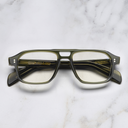
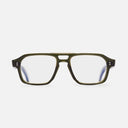
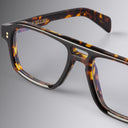
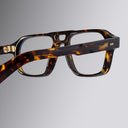
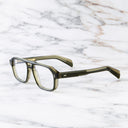
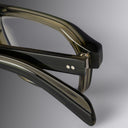
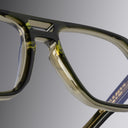
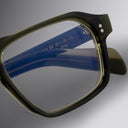
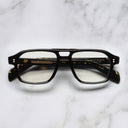
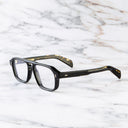
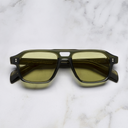
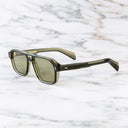
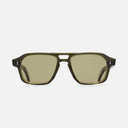
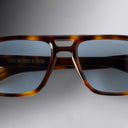
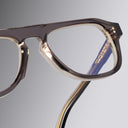
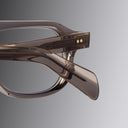
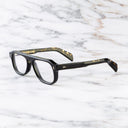
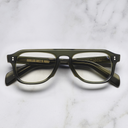
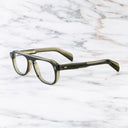
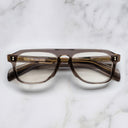
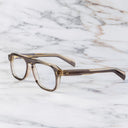
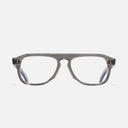
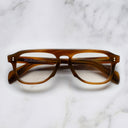
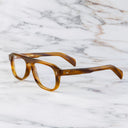
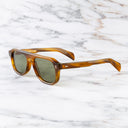
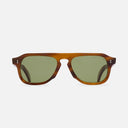
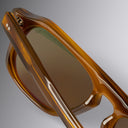
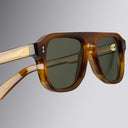
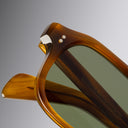
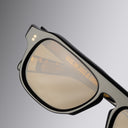
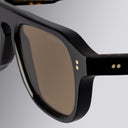
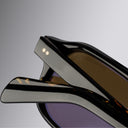
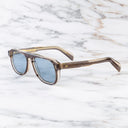
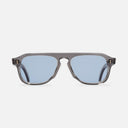
While he has spent a lifetime encouraging others to try the unfamiliar, it felt only right to see him step into something new himself. Sitting with great confidence in our GR15 Aviator, the shape felt far removed from the beloved rounds we expect to see him in, yet in many ways quintessentially Fergus. Carefully considered and quietly bold, it feels natural on a man who has never been afraid to surprise us.
A special thank you to Fergus and Margot Henderson for taking the time to sit down with Cutler and Gross, and for their warm hospitality. Fergus wears the GR15 Aviator Optical in Multi Havana.


















































In Conversation: Fergus Henderson OBE
The In Conversation series celebrates the stories and style of pioneers across the creative industries. We explore their craft, from beginnings to breakthroughs, and uncover how their Cutler and Gross frames mirror their unique aesthetic.
Creative by Document Studios | Photography by Jack Orton | Art direction by David Hellqvist | Interview by Maisie Taylor
Cutler and Gross recently sat down with Fergus Henderson OBE, British chef and founder of St. JOHN restaurant. We explored his lifelong philosophy around simplicity, craftsmanship and modern British identity, in food and beyond.
Fergus Henderson first pioneered the nose-to-tail dining movement in the early 90s with the opening of St. JOHN, which transformed British cuisine. Rooted in a philosophy of using every part of the animal, from bone marrow to pig's trotters, nose-to-tail was as much a cultural statement as a culinary one. This philosophy of his championed honesty, resourcefulness, and a deep respect for ingredients at a time when British cooking was finding its feet. As a catalyst for this movement, he went on to inspire a generation of chefs worldwide, cementing a place as one of the most quietly radical figures in modern food. Though he's recently stepped back from the kitchen pass, his influence continues to shape the broader culinary world. As a long-time customer and friend of the brand, Fergus has an instinct for enduring quality that mirrors Cutler and Gross's own ethos—bringing a fresh simplicity to timeless design.
We met on a crisp autumnal day at Rochelle Canteen in East London, a restaurant owned by the warm and welcoming chef Margot Henderson OBE, Fergus’ wife. As lunch service hummed along in the background under the Canteen’s grape vine-woven canopy, he tucked into a pork and prune terrine in between our conversation on craft, quality and the merits of a ‘spurtle’.
CG: It’s often said your philosophy is centred around simplicity, what does this actually mean to you, and how do you stop simple from becoming sterile?
FH: Simple is not easy, it can sometimes come across as one doesn’t care, when it actually needs much consideration, love and care. Especially with nose-to-tail cooking, simplicity is a moral term here. Nothing is wasted, and everything is respected. To me, roast bone marrow and parsley salad is simple perfection. An Aalto stool also stands out. I prefer restraint over flourish, where the craft is in doing less, but doing it perfectly.
CG: Cutler and Gross’s devotion to craftsmanship feels apparent with St. JOHN, parallel in terms of careful consideration in what you do. What makes something truly well made to you?
FH: Function, form, no frippery, and clear ideas about what it's for—I love tools for this reason. You must have patience and respect for the process, and let things speak for themselves and what they are, don’t try to hide their nature.
Fergus Henderson OBE, British Chef and Former St. JOHN Restaurateur
CG: St. JOHN has influenced a lot of notable dining globally and more recently has collaborated with clothing brands. The white coats, striped aprons, signature and well-loved chore coats and your iconic round glasses. Did you intend to create this strong visual identity?
FH: I have always loved workwear and the strong architecture of it. When Margot [Henderson] and I opened The French House Dining Room in 1992 I insisted the waiters wear patrol jackets. It makes them like sentinels—someone for the guests to look up to and have respect for in the dining room.
A uniform has always been important to me, it has structure, sureness and looks great.
CG: You’ve helped define what British food looks like. What does “modern Britishness” mean to you now?
FH: It's defined by the rich cultural diversity that we are all a part of, this includes British culture of the past and now. It’s exciting to see what comes out of it, but also good to remember the old ways, traditional food that was cooked by mothers and women in the counties.
Fergus Henderson OBE, British Chef and Former St. JOHN Restaurateur
CG: Do you believe there is an oversaturated use of terms like ‘Quality British’?
FH: It often seems that the term can be oversaturated and I put that down to journalism, they love to cling on to it. But also, it’s good to push what is made here, Genius Loci where we are in this place and time.
CG: How does your relationship with suppliers (farmers, butchers, fishermen) influence your appreciation towards the quality and care of ingredients?
FH: I have always said make friends with your butcher and life will be better. The suppliers we have are hugely important to us, our menu reflects their produce and of course the changing seasons. Farmer Tom brings us animals from Wales and Shropshire, and generally all grass fed original breeds and of beautiful tasting meat with great fat. Fat being so important for flavour, cooking and health. Like anything, care and quality start at the source and don’t go unnoticed.
CG: What is your ingredient go-to? And a kitchen tool go-to?
FH: Trotter Gear is essential. I also love a spurtle—a wooden tool dating back to the 15th century, simple and uncomplicated, designed for stirring.
CG: And what is your favourite rule to break in the kitchen?
FH: Never dice, if God wanted square vegetables he or she would have made them.
CG: You speak about food with an air of nostalgia. What’s a memorable meal you had as a child?
FH: My mother would make tripe and onions, braised slowly in milk and served with mash. She grew up in Bolton, and this was a dish from her childhood. They enjoyed tripe there and so inherently I always enjoy a plate of tripe too.
CG: You naturally seem open to curiosity and exploration in what you do. How important is curiosity, to you and the world generally?
FH: Curiosity is about look and understanding, it means respecting the process and not pretending. Simply put, in cooking, if we kill a whole animal it would be rude not to use the whole beast.
Fergus Henderson OBE, British Chef and Former St. JOHN Restaurateur
Fergus and his long-time business partner Trevor Gulliver have worn Cutler and Gross eyewear for years—Fergus first shopping his notable frames in the Knightsbridge store in the early 80s. His signature opticals were always at special request, selecting the perfect symmetry of the rounded 0105 and adapting the temples to feature a bespoke ‘cable curl’. This personalised design was crafted from rolled gold wire that created a tightly wound curl to gently hook around the ear. This detail was paramount to him, intended to ‘stop his glasses from slipping off his nose and into the soup’ the Cutler and Gross team recall with great fondness.
While he has spent a lifetime encouraging others to try the unfamiliar, it felt only right to see him step into something new himself. Sitting with great confidence in our GR15 Aviator, the shape felt far removed from the beloved rounds we expect to see him in, yet in many ways quintessentially Fergus. Carefully considered and quietly bold, it feels natural on a man who has never been afraid to surprise us.
A special thank you to Fergus and Margot Henderson for taking the time to sit down with Cutler and Gross, and for their warm hospitality. Fergus wears the GR15 Aviator Optical in Multi Havana.